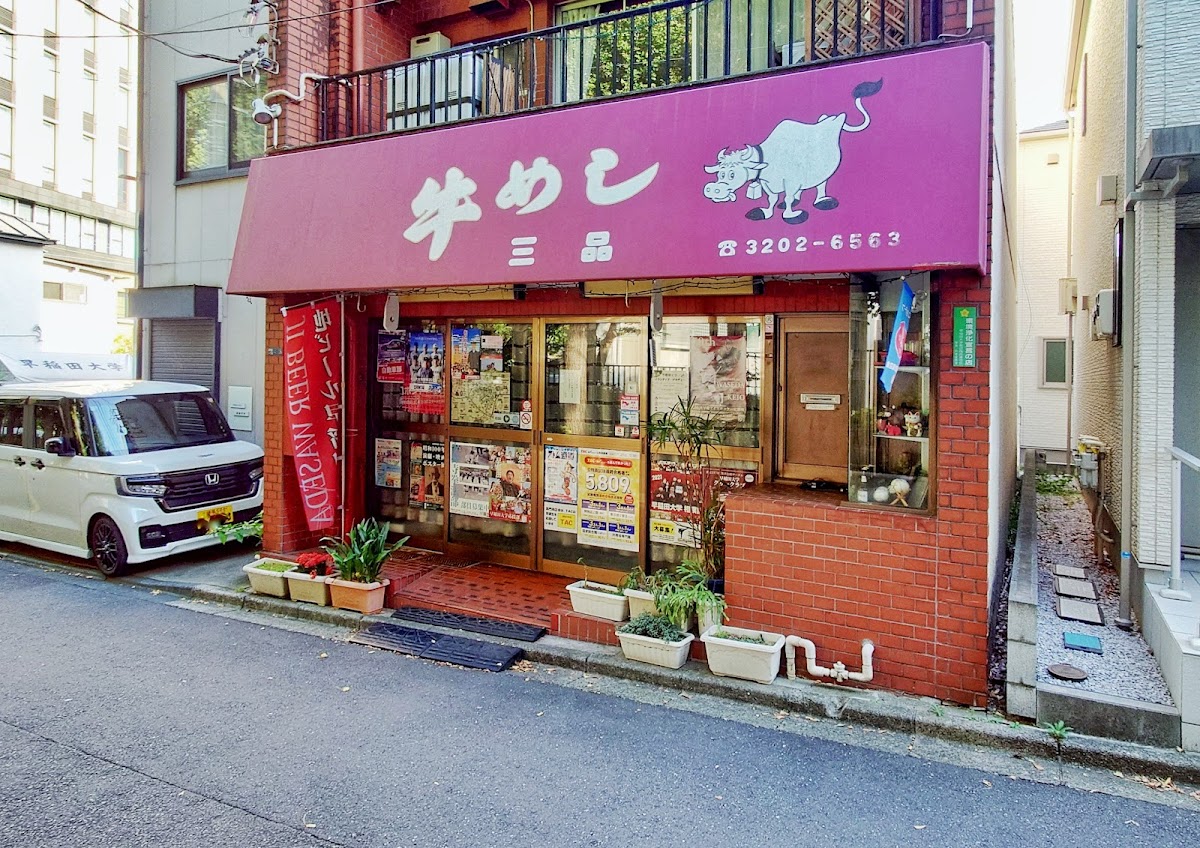
I have been visiting this quaint shop for 30 years. It hasn't changed at all. The have 3 things that they make: curry tonkatsu, and Gyudon. It's all done well and fresh and is fantastic. I love this place as it also has special memories for me from my college days in Japan. I highly recommend it, and it is a throwback that hasn't changed in decades. Everything around it has changed, but not this shop. Thank you for the food and the memories.
Overview
Walk down Nishiwaseda and you’ll spot Sanpin Shokudo tucked into the everyday rhythm of the neighborhood at 1 Chome-4-25 Nishiwaseda, Shinjuku City, Tokyo 169-0051, Japan. It doesn’t try to impress with flash. Instead, it wins people over the same way old-school diners do-by feeding them well, consistently, and with heart.
The first time I ate here was after a long afternoon near Waseda University, when hunger was louder than curiosity. The menu board looked simple, almost stubbornly so, but that’s exactly the point. Okinawan diners are built around comfort food, and this place sticks to home-style Okinawan cooking without apology. Dishes like goya champuru, rafute braised pork, and miso soup with island-style depth show up the way locals expect them to-generous portions, balanced flavors, and no shortcuts.
Okinawan cuisine isn’t just about taste; it’s tied to health and longevity. Research highlighted by National Geographic and the Okinawa Centenarian Study has long pointed to the traditional Okinawan diet as a contributor to the region’s high life expectancy. The emphasis on vegetables like bitter melon, tofu, pork prepared slowly, and moderate seasoning shows up clearly here. You can taste the method: ingredients are cooked gently, oils are used sparingly, and seasoning builds gradually rather than hitting all at once. It’s the kind of food that fills you up without weighing you down.
Watching the kitchen during a busy lunch rush is a lesson in efficiency. Orders are called out, pans move fast, and plates land on counters with muscle memory precision. That process matters. When recipes are repeated daily over years, consistency becomes the real signature. One regular I spoke to-an office worker who’s been coming for over a decade-said his order hasn’t changed in years because it never needs to. That kind of loyalty doesn’t happen by accident.
Reviews around Shinjuku often mention the same things: reliability, value, and atmosphere. The dining room feels lived-in, with mismatched stools and a low-key hum of conversation. You’ll hear students, longtime residents, and solo diners eating quietly. It’s not a place people rush through. Meals stretch a bit longer, which fits the Okinawan mindset of slowing down at the table.
The menu pricing also reflects diner culture. You’re not paying for trends or plating; you’re paying for nourishment. In a city where lunch can easily creep upward in cost, this spot keeps things grounded. That accessibility helps explain why it’s stayed relevant while flashier places rotate in and out of the area.
There are limits, and it’s fair to mention them. If you’re looking for English-heavy explanations or modern twists on Okinawan food, you won’t find much of that here. The menu favors familiarity over experimentation, and peak hours can mean a short wait. Still, those gaps are part of the charm. This is a place that knows exactly what it is and doesn’t stretch beyond that.
In a neighborhood packed with options, this diner stands out by staying rooted. The food reflects regional tradition, the process respects time-tested methods, and the steady stream of repeat customers says more than any hype ever could.
Good to know
Service options
✓ Dine-in ✓ DeliveryPopular for
✓ Lunch ✓ Solo diningAccessibility
✓ Wheelchair-accessible entrance ✓ Wheelchair-accessible car park ✓ Wheelchair-accessible seatingOfferings
✓ Alcohol ✓ BeerDining options
✓ Lunch ✓ Dinner ✓ Table serviceAmenities
✓ ToiletCrowd
✓ University studentsPlanning
✓ Accepts reservationsPayments
✓ PayPayPhotos
1 / 4
Location
Reviews
- No ratings yet 206 reviews
Haven’t really changed for decades, but I was happy about it. Food is served very quickly and tastes awesome!
早稲田の学生に愛されて還暦を迎えた老舗食堂。 ノスタルジーを感じながら食べるカツ玉ミックス。 これかも続いてほしい。